
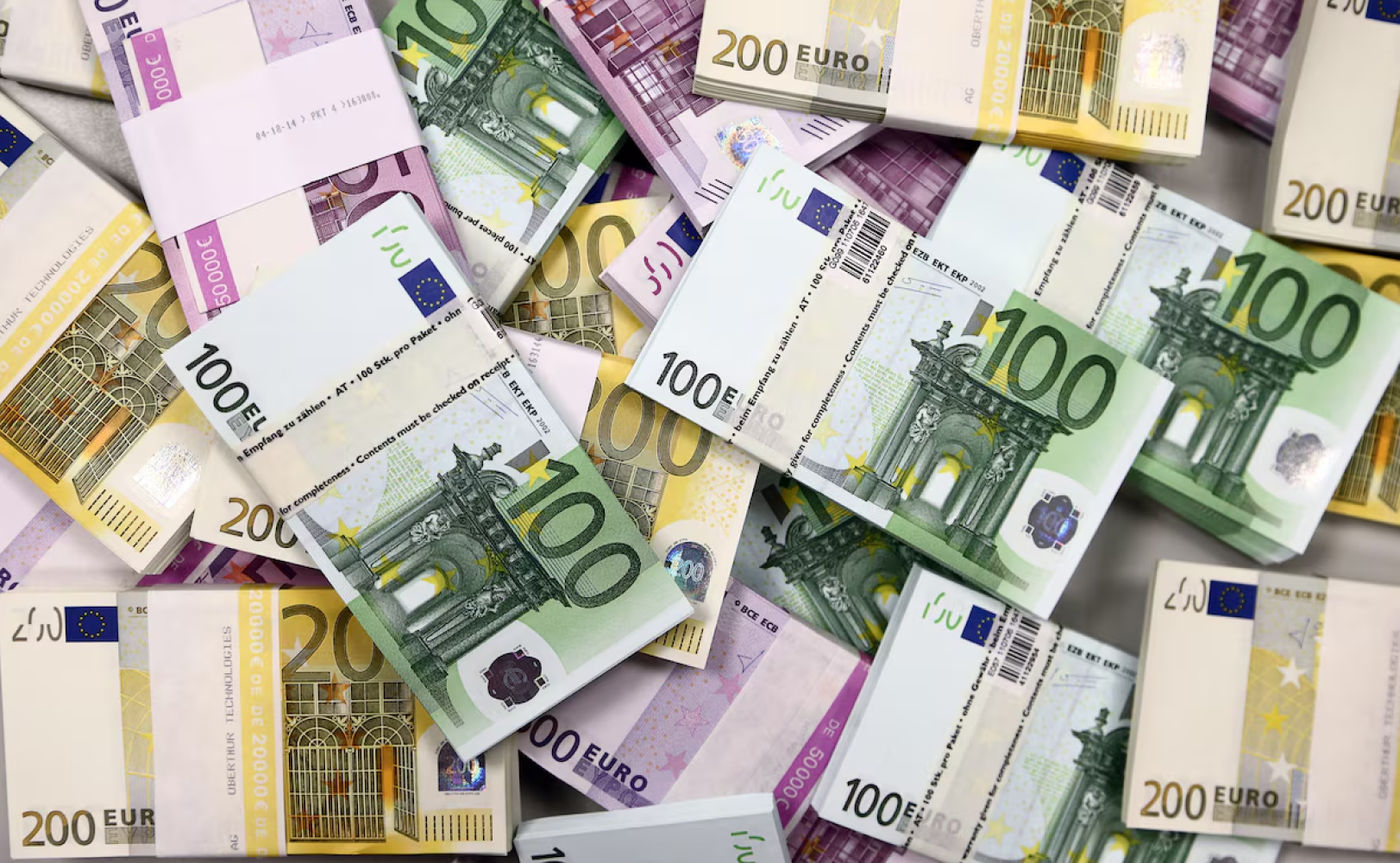
The U.S. dollar is once again weakening against both the euro and the Chinese yuan, at a time when European and Chinese leaders are actively promoting a stronger international role for their currencies. Recent exchange rate movements appear to support these ambitions, while also aligning with Washington’s tolerance for a softer dollar.
As the Lunar New Year approaches, China’s offshore yuan has climbed to its strongest level against the dollar in nearly three years. Since the beginning of last year, the dollar has dropped about 6% against the renminbi.
The euro’s performance has been even more striking. Over the same period, it has surged roughly 15% against the dollar, hovering near the five-year high above $1.20 reached last month.
These currency shifts reflect recent messaging from policymakers. Sources within the European Central Bank have indicated plans to reinforce the long-standing goal of promoting a “global euro.” This includes expanding euro liquidity to more countries, making it easier and cheaper to use the currency internationally, and strengthening its global footprint.
Austria’s central bank governor Martin Kocher recently highlighted growing interest in the euro from international counterparts, suggesting that the currency is increasingly viewed as a safe haven.
Meanwhile, Chinese leadership has reiterated its objective of building a more powerful and widely used currency in global trade, finance, and reserves. Beijing’s push for a more multipolar financial system comes amid broader trade diplomacy and a strategic effort to reduce reliance on the dollar.
Investor Sentiment Shifts
Global investors appear to be rethinking the dollar’s long-standing dominance after a year marked by aggressive U.S. trade policies and diplomatic tensions. Many in Washington seem comfortable with a weaker dollar, seeing it as part of a broader rebalancing of global trade and capital flows.
Although official rhetoric still refers to a “strong dollar,” U.S. policymakers have clarified that strength relates more to economic fundamentals than to short-term exchange rates. Some analysts even speculate that currency considerations may be quietly embedded in bilateral trade negotiations.
Despite the uncertainty, markets have been reluctant to reverse the dollar’s recent decline.
Euro and Yuan Stability
Interestingly, while both the euro and yuan have gained against the dollar, their exchange rate against each other has remained relatively stable since last year’s U.S. tariff shock. Given the deep trade ties between Europe and China, this stability is significant.
In trade-weighted currency baskets, both regions assign substantial weight to each other’s currencies, nearly matching the dollar’s share. This interconnected structure suggests that further dollar weakness against one currency could quickly influence the other.
Bond Markets and Yield Calculations
For global investors, particularly in sovereign bonds, long-term currency expectations play a critical role. Even when U.S. Treasury yields are higher than their European or Chinese counterparts, anticipated currency appreciation can offset that advantage.
For example, the yield premium on five-year U.S. Treasuries over similar Chinese bonds could be neutralized if the dollar declines further against the yuan over the coming years. Lower inflation in China compared to the United States adds support to the case for yuan appreciation.
Recent reports that Chinese regulators are encouraging domestic institutions to reconsider heavy exposure to U.S. Treasuries have added to pressure on the dollar. Although the dollar remains the dominant global reserve currency, its share in international reserves has gradually declined.
For euro-denominated debt, the currency dynamic could become even more attractive if euro strength prompts additional monetary easing from the European Central Bank.
A Fragile Balance
It is possible that a weaker dollar suits all major players for now, reducing the urgency for a formal currency accord. However, financial markets can shift rapidly, especially when currency movements gather momentum.
As Europe and China pursue greater global influence for their currencies, and as the United States reassesses its own stance on dollar strength, the evolving balance in the international monetary system warrants close attention.


Navegue por los mercados bursátiles y descubra un mundo de oportunidades.
Bullwaves es el nombre comercial de Equitex Capital Limited (número de registro 8434948-1), una empresa autorizada y regulada por la Autoridad de Servicios Financieros (la «FSA», número de licencia). SD185) con domicilio legal registrado en CT House, oficina número 9A, Providence, Mahe (Seychelles) y dirección física en la oficina núm. Al9C, Providence Complex, Providence, Mahe, Seychelles.
ETX Services Limited, con el número de registro mercantil HE455407, una empresa registrada en Chipre con domicilio social en Archiepiskopou Makariou lll 160, 3026 Limassol, es nombrada representante y distribuidora independiente.
Exención de responsabilidad por riesgos:
Los derivados extrabursátiles son instrumentos complejos y conllevan un alto riesgo de perder su capital inicial rápidamente debido al apalancamiento. Debe considerar si comprende cómo funcionan los derivados extrabursátiles y si puede permitirse asumir el alto nivel de riesgo para su capital. Invertir en derivados extrabursátiles conlleva riesgos importantes y no es adecuado para todos los inversores.
Al adquirir nuestros productos derivados, no tiene ningún derecho, derecho u obligación sobre el activo financiero subyacente. Equitex no es un asesor financiero y todos los servicios se prestan únicamente en función de la ejecución. La información es únicamente de carácter general y no tiene en cuenta sus objetivos financieros, necesidades o circunstancias personales. Los documentos legales importantes relacionados con nuestros productos y servicios están disponibles en nuestro sitio web. Debe leer y comprender estos documentos antes de solicitar cualquier producto o servicio de Bullwaves y obtener asesoramiento profesional independiente según sea necesario.
Restricciones regionales:
La información o los servicios descritos en este sitio web no están dirigidos ni se ofrecen a residentes de Bélgica, Israel, Irán, Maldivas, Corea del Norte, Estados Unidos, Afganistán, Bielorrusia, República Centroafricana, China, Irán, Rusia, Cuba, Libia, Nicaragua, Autoridad Palestina/Gaza/Cisjordania, Venezuela y a las jurisdicciones incluidas en las listas de sanciones del GAFI y la UE/ONU ni a ninguna otra persona en cualquier jurisdicción donde dicha distribución o uso sea contrario a las leyes o regulaciones locales. Para obtener más información, póngase en contacto con nuestro servicio de asistencia. Clientes que se incorporaron a través de www.bullwaves.com puede ponerse en contacto con nuestro equipo de soporte en support@bullwaves.com. Para quejas, envíenos un correo electrónico a compliance@bullwaves.com
Contact us by phone: +44 7488 822576
Risk Warning: CFDs are complex instruments and come with a high risk of losing money rapidly due to leverage. Investors should consider whether they understand how CFDs work before investing.