
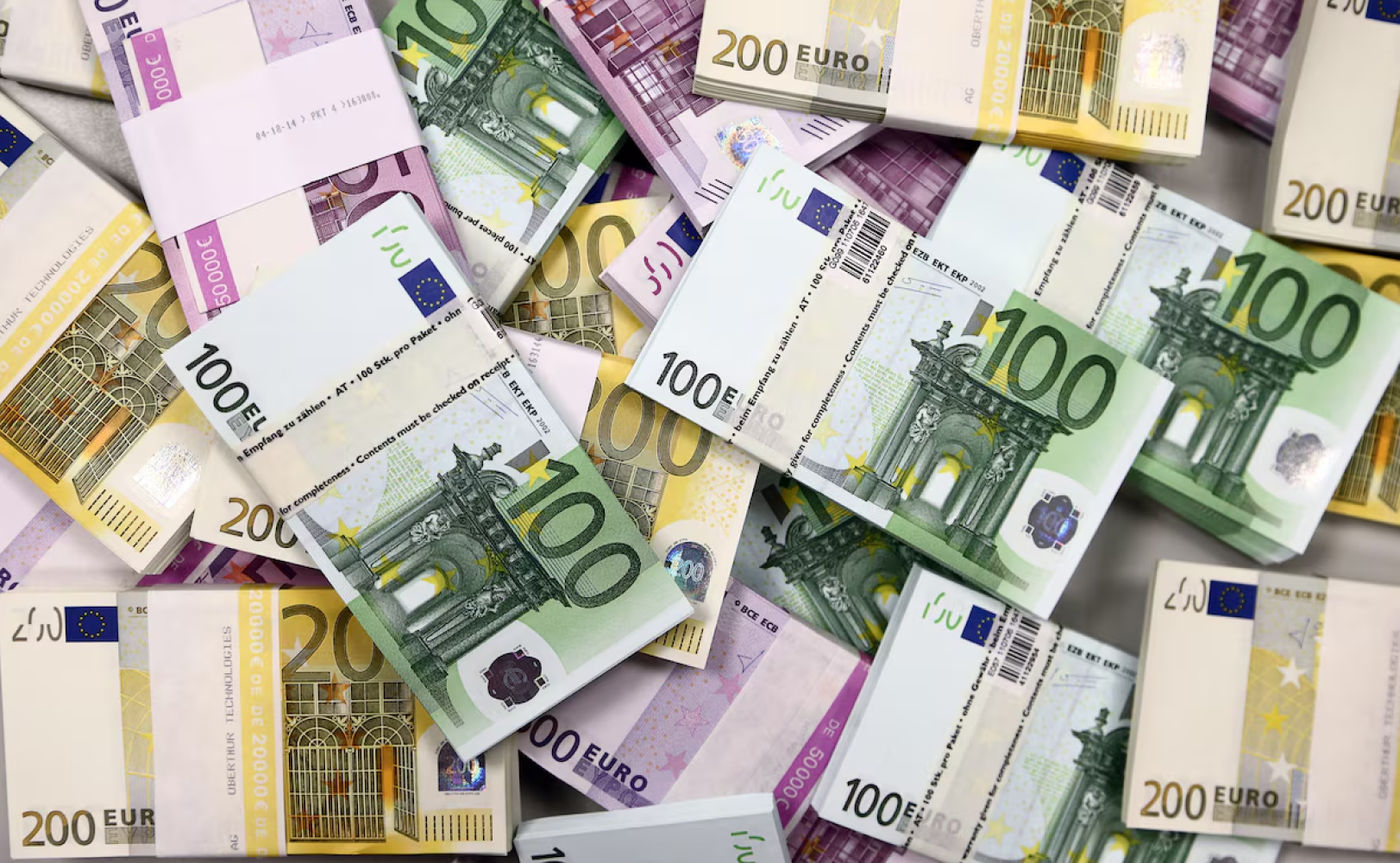
The U.S. dollar is once again weakening against both the euro and the Chinese yuan, at a time when European and Chinese leaders are actively promoting a stronger international role for their currencies. Recent exchange rate movements appear to support these ambitions, while also aligning with Washington’s tolerance for a softer dollar.
As the Lunar New Year approaches, China’s offshore yuan has climbed to its strongest level against the dollar in nearly three years. Since the beginning of last year, the dollar has dropped about 6% against the renminbi.
The euro’s performance has been even more striking. Over the same period, it has surged roughly 15% against the dollar, hovering near the five-year high above $1.20 reached last month.
These currency shifts reflect recent messaging from policymakers. Sources within the European Central Bank have indicated plans to reinforce the long-standing goal of promoting a “global euro.” This includes expanding euro liquidity to more countries, making it easier and cheaper to use the currency internationally, and strengthening its global footprint.
Austria’s central bank governor Martin Kocher recently highlighted growing interest in the euro from international counterparts, suggesting that the currency is increasingly viewed as a safe haven.
Meanwhile, Chinese leadership has reiterated its objective of building a more powerful and widely used currency in global trade, finance, and reserves. Beijing’s push for a more multipolar financial system comes amid broader trade diplomacy and a strategic effort to reduce reliance on the dollar.
Investor Sentiment Shifts
Global investors appear to be rethinking the dollar’s long-standing dominance after a year marked by aggressive U.S. trade policies and diplomatic tensions. Many in Washington seem comfortable with a weaker dollar, seeing it as part of a broader rebalancing of global trade and capital flows.
Although official rhetoric still refers to a “strong dollar,” U.S. policymakers have clarified that strength relates more to economic fundamentals than to short-term exchange rates. Some analysts even speculate that currency considerations may be quietly embedded in bilateral trade negotiations.
Despite the uncertainty, markets have been reluctant to reverse the dollar’s recent decline.
Euro and Yuan Stability
Interestingly, while both the euro and yuan have gained against the dollar, their exchange rate against each other has remained relatively stable since last year’s U.S. tariff shock. Given the deep trade ties between Europe and China, this stability is significant.
In trade-weighted currency baskets, both regions assign substantial weight to each other’s currencies, nearly matching the dollar’s share. This interconnected structure suggests that further dollar weakness against one currency could quickly influence the other.
Bond Markets and Yield Calculations
For global investors, particularly in sovereign bonds, long-term currency expectations play a critical role. Even when U.S. Treasury yields are higher than their European or Chinese counterparts, anticipated currency appreciation can offset that advantage.
For example, the yield premium on five-year U.S. Treasuries over similar Chinese bonds could be neutralized if the dollar declines further against the yuan over the coming years. Lower inflation in China compared to the United States adds support to the case for yuan appreciation.
Recent reports that Chinese regulators are encouraging domestic institutions to reconsider heavy exposure to U.S. Treasuries have added to pressure on the dollar. Although the dollar remains the dominant global reserve currency, its share in international reserves has gradually declined.
For euro-denominated debt, the currency dynamic could become even more attractive if euro strength prompts additional monetary easing from the European Central Bank.
A Fragile Balance
It is possible that a weaker dollar suits all major players for now, reducing the urgency for a formal currency accord. However, financial markets can shift rapidly, especially when currency movements gather momentum.
As Europe and China pursue greater global influence for their currencies, and as the United States reassesses its own stance on dollar strength, the evolving balance in the international monetary system warrants close attention.


Navigate the trading markets and discover a world of opportunities.
Bullwaves is a trading name of Equitex Capital Limited (Registration No. 8434948-1), a company authorized and regulated by the Financial Services Authority (the "FSA", licence no. SD185) with legal registered address in CT House, office number 9A, Providence, Mahe, Seychelles and physical address in Office No. Al9C, Providence Complex, Providence, Mahe, Seychelles.
ETX Services Limited with company registration number HE455407, a company registered in Cyprus with registered address Archiepiskopou Makariou lll 160, 3026 Limassol is appointed as Independent Representative and Distributor.
Risk Disclaimer:
Over-the-counter derivatives are complex instruments and come with a high risk of losing your initial capital rapidly due to leverage. You should consider whether you understand how over-the-counter derivatives work and whether you can afford to take the high level of risk to your capital. Investing in over-the-counter derivatives carries significant risks and is not suitable for all investors.
When acquiring our derivative products you have no entitlement, right or obligation to the underlying financial asset. Equitex is not a financial advisor and all services are provided on an execution only basis. Information is of a general nature only and does not consider your financial objectives, needs or personal circumstances. Important legal documents in relation to our products and services are available on our website. You should read and understand these documents before applying for any Bullwaves products or services and obtain independent professional advice as necessary.
Regional Restrictions:
The information or services described on this website is not directed at or offered to residents of Belgium, Maldives, North Korea, United States, Afghanistan, Belarus, Central African Republic, China, Russia, Cuba, Libya, Nicaragua, Palestinian Authority/Gaza/West Bank, Venezuela and to jurisdictions on the FATF and EU/UN sanctions lists or any other person in any jurisdiction where such distribution or use would be contrary to local laws or regulations. For more information please contact our support. Clients who onboarded via www.bullwaves.com can contact our support team at support@bullwaves.com.For complaints please email us at compliance@bullwaves.com
Contact us by phone: +44 7488 822576
Risk Warning: CFDs are complex instruments and come with a high risk of losing money rapidly due to leverage. Investors should consider whether they understand how CFDs work before investing.